Stützpunkt Pointe Du Hoc
Allied intelligence reported that the battery contained six 155 mm. guns, captured from the French. They covered the two beaches which would go down in history as ‘Omaha’ and ‘Utah’. So, in April 1944, the decision was made to bomb the site. The guns were then moved a mile inland.
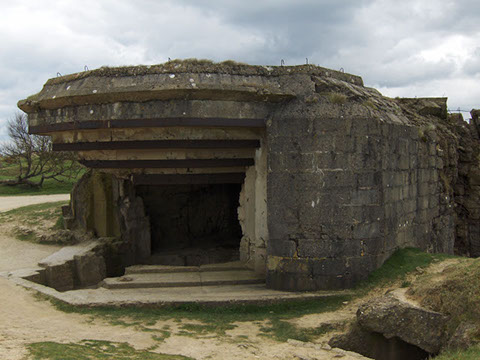
Air reconnaissance photos recorded the after effects of the bombing, which had not affected the battery’s casemates in any serious way. Allied Supreme HQ knew that the guns had been moved but still felt the casemates were a threat, as they could house artillery forward observers. Consequently, the decision was made to make a ground assault on the battery.
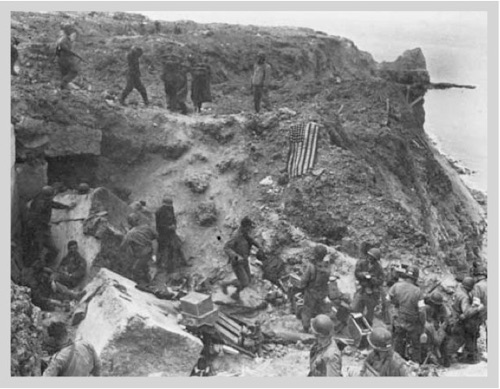
With its cliff-top position, the only way to take the battery was from the beach. This task fell to 225 men of US 2nd Ranger Battalion. After some initial manoeuvre amongst commanders, the task force was led by Col James E Rudder, and ‘Rudder’s Rangers’ were born. They would make their climb to the cliff-top before the main landing. They were not told of the guns being moved.
The whole operation began early in the morning of 6 June, and a naval bombardment kept down the heads of the German garrison. After some navigation problems, the Rangers arrived at the beach below the cliffs and began the long climb, using ladders and ropes. They sustained a few casualties, but the majority made it to the top, and found the guns gone. A patrol discovered their new site and they were destroyed.
Over the next two days, the Rangers were subjected to heavy attacks, which they bravely held off. Reinforcements finally arrived to relieve the remaining 90 men.
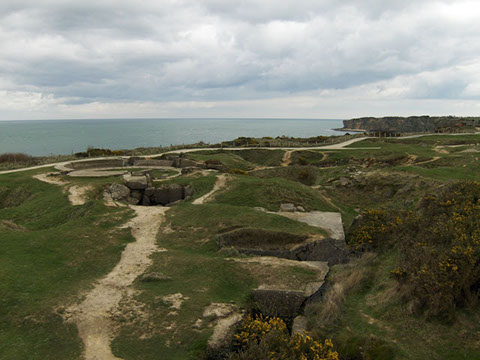
Today, Pointe du Hoc is easily visited and remains much as it did on that fateful day.